Project Type
Kitchen Cabinetry in Newport Beach
New boxes, refaced fronts, or a full custom build, specified around how the room is really used and what the salt air will do to the finish.
Cabinetry is the largest line on almost every kitchen quote and the one that decides how the finished room feels. The choice runs along two axes. The first is construction: framed cabinets carry a face frame across the front of the box, which is the traditional American shape and hides a lot of sins in an out-of-square wall; frameless, sometimes called full-access, drops the frame and gives noticeably more usable width per opening, which matters in the narrow galley kitchens common on the Balboa Peninsula and Balboa Island. The second axis is procurement: stock cabinetry ships in fixed widths and short lead times, semi-custom allows sizes and finishes to be adjusted within a manufacturer's system, and full custom is built to the room. Refacing sits outside both, replacing doors, drawer fronts and end panels while keeping sound boxes in place, and it is a reasonable answer when the layout already works and the carcasses are solid. Coastal exposure matters to the finish specification more than most people expect, because painted and thermofoil surfaces near the water live in air carrying salt and in a climate where the marine layer keeps humidity up through the summer mornings.
What the scope covers
- Room measured and drawn as built, with wall deviation recorded, because pre-1980 Newport Beach framing is rarely plumb across a full cabinet run
- Framed and frameless construction compared against the actual opening widths in the room rather than in the abstract
- Box material specified for a coastal house: plywood carcasses and marine-tolerant hardware where the kitchen sits close to the water
- Door style, finish and sheen selected knowing that a high-gloss lacquer shows every fingerprint in strong beach light
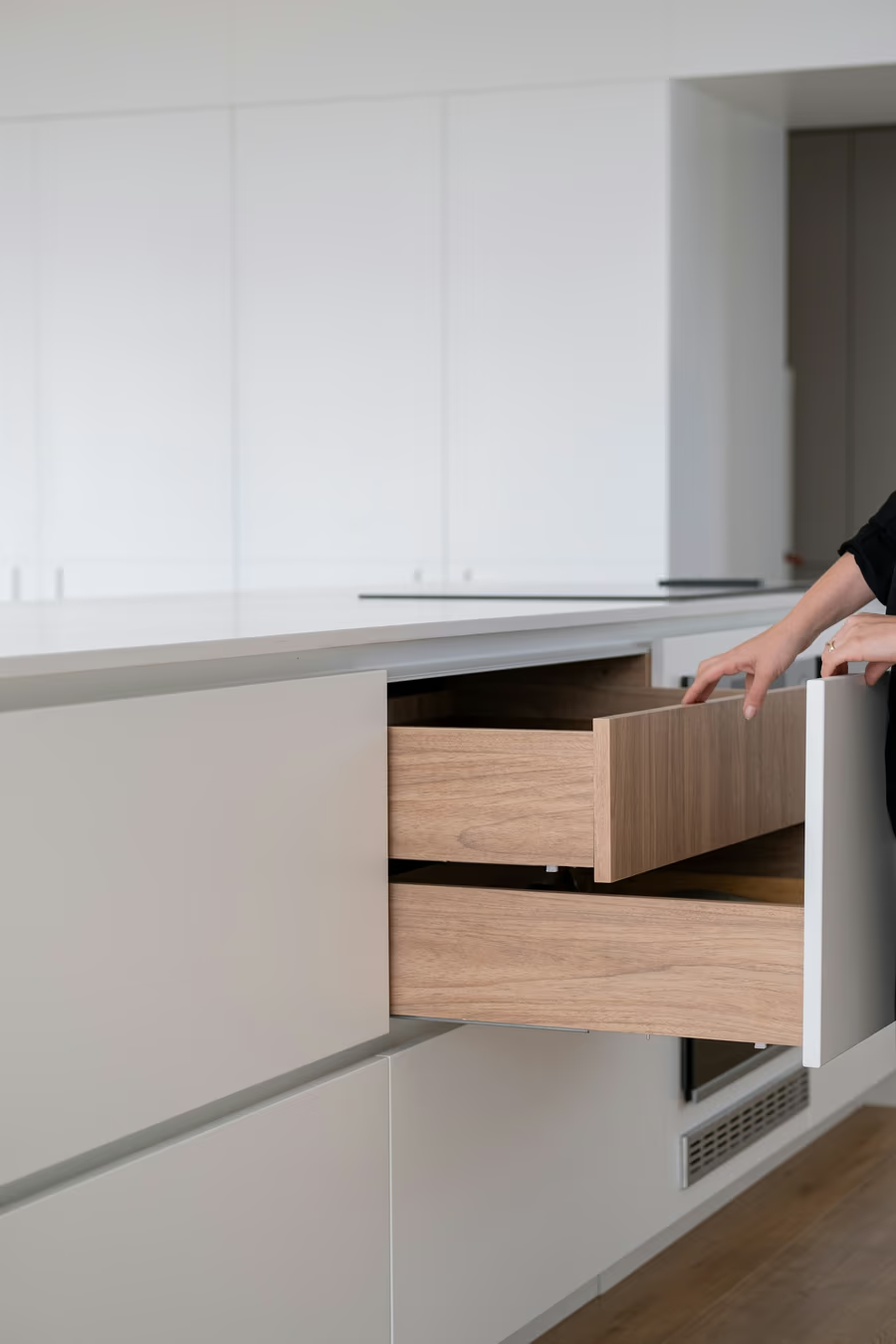
- Soft-close hinges and full-extension undermount runners as the standard rather than the upgrade
- Interior fit-out drawn to what goes in each cabinet: tray dividers, deep drawers for pans, pull-out waste, corner solutions
- Refacing assessed honestly, including whether the existing boxes are worth keeping
- Lead times confirmed in writing before deposit, because cabinetry sets the whole project schedule
To get this priced on your own kitchen, call (949) 791-4160 or use the quote form for a free quote.
Read next
On cabinetry, specifically
- Is refacing worth it, or is it a false economy?
- It depends entirely on the boxes. If the carcasses are plywood, square, dry and in a layout that already works, refacing gives you most of the visual change for roughly 40 to 60 percent of the cost of replacement, and it takes days rather than weeks. If the boxes are particleboard, have swollen at the sink base, or the layout is the problem, refacing spends real money on hiding a kitchen you still will not enjoy. On the pre-1980 stock here, sink-base water damage is common enough that it is worth having someone open the doors and look before the decision gets made.
- Framed or frameless in a small Newport Beach kitchen?
- Frameless usually wins on the narrow lots. Dropping the face frame recovers a couple of inches of clear opening on every cabinet and gives full-height access to the drawer boxes, which in a galley kitchen on the peninsula is the difference between a usable pan drawer and a decorative one. Framed construction still has arguments in its favour: it is more forgiving on an uneven wall, it suits the traditional inset look many Corona del Mar and Newport Heights houses want, and inset doors in particular need a frame to sit in.
- What finish holds up best near the water?
- Conversion varnish and catalysed finishes applied in a spray shop hold up better than site-applied paint, and a satin or matte sheen hides the salt-hazed film that coastal air leaves on everything far better than gloss. Thermofoil is inexpensive and wipes clean, but it does not like sustained heat, so it is a poor neighbor to a professional range. On the water itself, hardware is worth more attention than the doors: marine-grade stainless and solid brass age gracefully, plated finishes on a zinc base often do not.
- How far ahead do cabinets need ordering?
- Stock lines can be a couple of weeks. Semi-custom is commonly six to twelve weeks from approved drawings. Full custom, particularly with a specific paint match or a rift-sawn white oak, can be twelve to twenty weeks and occasionally longer. The date that matters is not the order date but the date the drawings are signed off, since manufacturers start the clock there. This is the single most common reason a kitchen schedule slips.
- Can existing cabinets be repainted instead?
- Solid wood doors and face frames take a sprayed finish well and the result can be excellent. Thermofoil and melamine do not, and no amount of preparation makes them. The realistic test is whether the doors are wood: if they are, a proper spray refinish is a legitimate middle path between refacing and replacement, generally with the doors taken away to a shop rather than sprayed in the room.
From the Journal
More on this, written for Newport Beach
When to Schedule a Kitchen Remodel on the Coast
Rainfall here is concentrated in winter and traffic is concentrated in summer. What that means for scheduling a Newport Beach kitchen remodel, and what matters more.
HOA Approval Runs on Its Own Clock, Not Your Contractor's
Association approval runs on a board meeting calendar, not on a construction schedule. How to sequence a Newport Beach condo kitchen so it does not stall the job.
The Climate Here Justifies an Indoor-Outdoor Kitchen. The Detailing Decides It
Newport Beach averages 13.33 inches of rain a year and 72.6 degrees in the warmest month. The climate supports an outdoor kitchen. Here is what the detailing has to get right.
Related Projects
Scopes that usually travel together
Kitchen work rarely arrives as a single line item. New cabinetry means new countertops, because the old stone will not survive removal. Opening a wall means rethinking the layout it was constraining. And on a pre-1980 house, the moment the walls are open is the cheapest moment the wiring and pipework will ever be reachable.
Full Kitchen Remodel
Everything out and everything new: cabinetry, surfaces, appliances, lighting, flooring and the wiring and plumbing behind them.
Countertops and Backsplash
Slab selection, templating, fabrication and installation, with the seam and edge decisions made before the stone is cut rather than after.
Kitchen Layout Changes
Taking out the wall between the kitchen and the rest of the house, and doing it as a structural job rather than a demolition job.
Kitchen Islands
An island that earns its floor space: sized to the clearances the room can give, and serviced properly if it carries a sink or a cooktop.
Find out what your kitchen costs
Call (949) 791-4160 or use the quote form, and a Newport Beach kitchen company prices the work at no charge.